On this page
Open floor plans have become the most popular layout in American homes. Knocking down the wall between the kitchen and living area creates a spacious, social environment. But it also means your kitchen is always on display — there's no closing a door to hide the mess.
Designing an IKEA kitchen for an open floor plan requires thinking about aesthetics from every angle, managing cooking odors and noise, and creating a space that flows naturally with the rest of your home. Here's how to get it right.
Layout Options for Open Kitchens
Island Kitchen
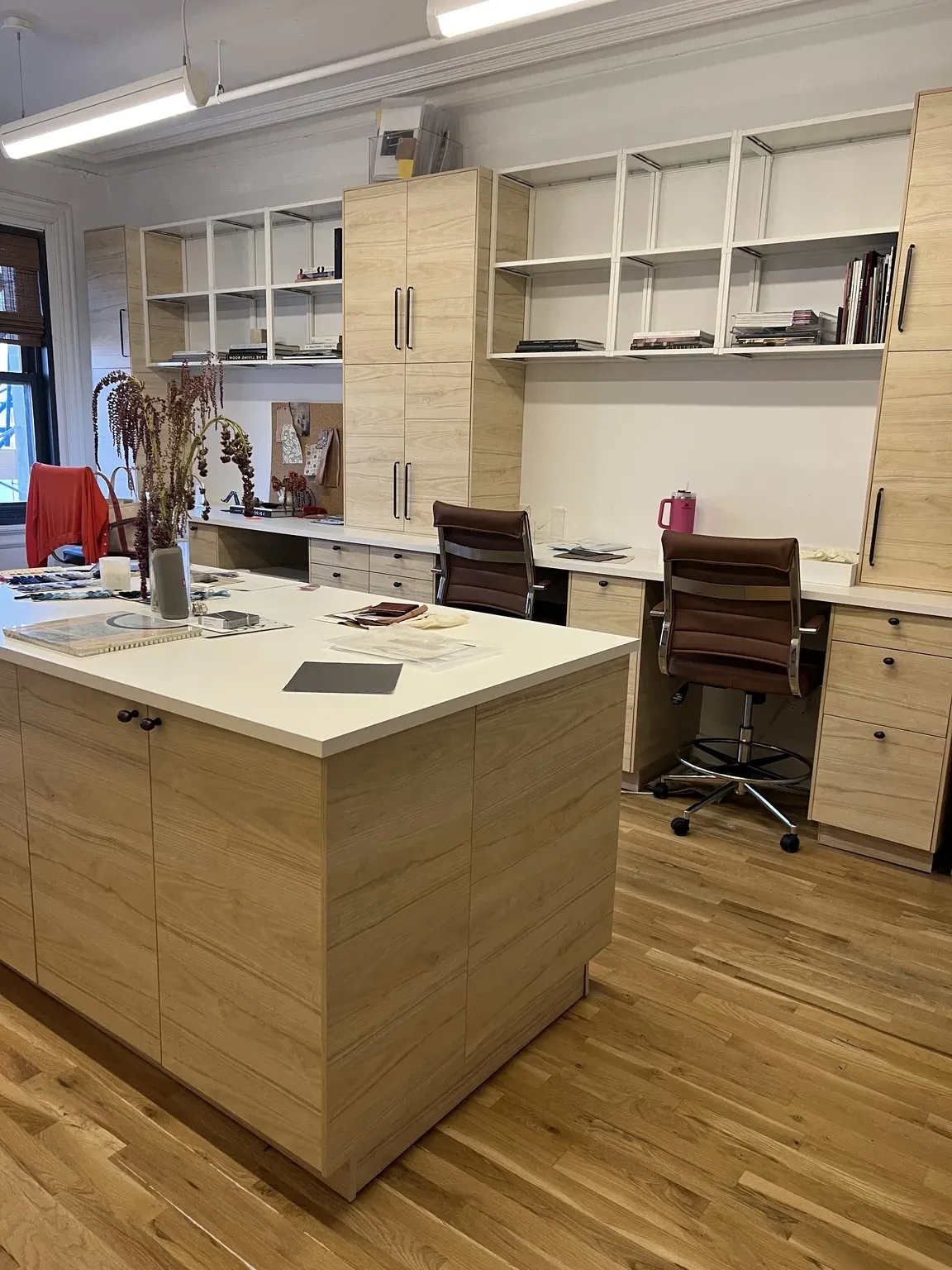
The most popular open-plan layout. Cabinets along one or two walls, with a freestanding island separating the kitchen from the living area.
Advantages:
- The island creates a natural boundary without blocking sight lines
- Provides seating that faces the living area (great for entertaining and supervising kids)
- Maximum counter and storage space
- The cook can interact with guests
Best IKEA configuration:
- Perimeter cabinets (base + wall) along the back wall
- SEKTION-based island with seating overhang on the living room side
- Cover panels on all exposed island sides
See our island guide for detailed island planning.
Peninsula Kitchen
Similar to an island, but the peninsula is connected to the wall on one end, creating an L-shape or U-shape that extends into the room.
Advantages:
- Works in spaces too narrow for an island (less clearance needed since you only walk around three sides)
- Provides the same visual boundary as an island
- No plumbing or electrical routing through the floor (everything connects through the wall)
Best IKEA configuration:
- Base cabinets along two walls forming an L-shape
- Peninsula extending from one wall into the room
- Cover panel on the exposed end of the peninsula
- Countertop overhang for seating on the living room side
Single Wall with Exposed Sides
In some open layouts, the kitchen occupies a single wall with no island or peninsula. The open floor extends directly from the kitchen cabinets to the living area.
Advantages:
- Maximum floor space
- Clean, minimalist look
- Simplest and most affordable layout
Challenges:
- Limited counter and storage space
- No natural boundary between kitchen and living area
- Exposed cabinet ends on one or both sides of the run
Finishing Exposed Cabinet Sides
In a closed kitchen, nobody sees the sides of the last cabinet in a run. In an open kitchen, those sides are on full display. IKEA's answer is cover panels (also called end panels):
Where You Need Cover Panels
- End of every cabinet run that's visible from the living area
- Both sides of islands and peninsulas (front, back, and ends)
- Side of any cabinet next to an appliance (especially the side of a refrigerator cabinet visible from the living room)
- Above-refrigerator cabinet sides that are visible
Cover Panel Options
- Matching door-style panels: IKEA sells cover panels in every current door style. These give a seamless look.
- Contrasting panels: Use a different material or color on the island for a furniture-like effect
- Decorative end panels: Some door styles (BODBYN, LERHYTTAN) have decorative end panels with extra detail
Application Tips
- Cover panels are glued and sometimes screwed to the cabinet sides
- Make sure to account for cover panel thickness in your measurements (typically 3/4")
- On islands, the back-side cover panel needs to be cut to fit around the toe kick
Color Coordination with Living Areas
In an open floor plan, your kitchen color scheme needs to work with the adjacent living space. Here's how to approach this:
Unified Approach
Use one neutral palette throughout. Example:
- White AXSTAD cabinets + white walls in living area + wood-tone accents in both spaces
- Light gray HAVSTORP cabinets + gray-tone living room with coordinating textiles
Complementary Approach
Use related but distinct color schemes. Example:
- Dark NICKEBO anthracite base cabinets with white uppers in the kitchen + charcoal accent wall in the living room
- LERHYTTAN black stained cabinets + warm wood furniture in the living area
Focal Point Approach
Make the kitchen a deliberate design statement. Example:
- BODBYN dark green cabinets with brass hardware as the focal point, with neutral living room colors that let the kitchen stand out
- KALLARP turquoise accent island with neutral perimeter cabinets, echoed by turquoise throw pillows in the living area
What Usually Works Best
In our experience across New England homes, a unified or complementary approach works best. The kitchen and living area should feel like one cohesive space, not two separate rooms that happen to share a wall.
Noise and Ventilation Considerations
Kitchen Noise in Open Spaces
In a closed kitchen, noise from cooking, dishwashers, garbage disposals, and range hoods is contained. In an open kitchen, it carries directly into the living area. Strategies to minimize noise:
- Choose a quiet dishwasher: Look for models rated at 44 dB or below. IKEA's own dishwashers are reasonably quiet, but Bosch, Miele, and KitchenAid offer the quietest options.
- Soft-close everything: IKEA's UTRUSTA soft-close hinges and MAXIMERA soft-close drawers eliminate slamming noise. This matters enormously in an open plan.
- Consider a quieter garbage disposal: InSinkErator Evolution series runs much quieter than budget disposals.
- Range hood noise: This is the biggest noise source. Look for range hoods rated at 1-3 sones on the lowest setting. IKEA's built-in hoods are moderate; premium brands like Zephyr and Broan offer quieter options.
Ventilation Is Critical
In a closed kitchen, cooking odors dissipate within the room. In an open plan, they fill the entire living space. Proper ventilation is essential:
- Always choose a ducted range hood over ductless. Ducted hoods remove cooking fumes from the house. Ductless hoods just filter and recirculate (they catch grease but don't remove odors).
- Size the hood appropriately: CFM (cubic feet per minute) should match your cooking style. Light cooking: 150-300 CFM. Regular cooking with gas: 400-600 CFM. Wok or high-heat cooking: 600+ CFM.
- Run the hood every time you cook: Many people forget to turn it on. Consider a hood with auto-on capability.
- Plan the duct route during the renovation: Ductwork needs to exit through an exterior wall or roof. This must be planned before cabinets are installed.
See our ventilation guide for detailed hood selection and installation information.
Lighting Design for Open Kitchens
In an open floor plan, kitchen lighting is part of the overall room lighting design. Consider these layers:
Task Lighting
- Under-cabinet LED strips (IKEA OMLOPP or IRSTA): Essential for counter illumination and they create a warm ambiance in the evening
- Pendant lights over the island: Both functional (for prep work) and decorative. Usually 2-3 pendants spaced evenly over a medium island.
Ambient Lighting
- Recessed ceiling lights: Plan placement to avoid shadows from upper cabinets. Dimmable recessed lights let you adjust the mood.
- In-cabinet lighting: Glass-front wall cabinets with interior LED lights add a warm glow and visual depth.
Decorative Lighting
- Statement pendants: Over an island or peninsula, pendant lights serve as a design element visible from the living area
- Dimming capability: In an open plan, dimming lets you transition from bright task lighting during cooking to softer ambient lighting during entertaining
Coordination with Living Area
Match the color temperature of your kitchen lights with the living area. If your living room has warm (2700K) lighting, don't put cool (4000K+) lights in the kitchen — the temperature difference is jarring in an open space.
Defining the Kitchen Zone Without Walls
In a fully open plan, you still want the kitchen to feel like a distinct zone. Ways to achieve this without walls:
Flooring Transition
Use different flooring in the kitchen than the living area. For example, tile or luxury vinyl in the kitchen transitioning to hardwood in the living area. The material change subtly defines the kitchen boundary.
Ceiling Treatment
A dropped soffit or tray ceiling above the kitchen area creates visual definition. This is also a natural place to install recessed lighting.
Island or Peninsula
The most common zone-defining element. The island/peninsula creates a physical edge to the kitchen space while keeping it visually open.
Rug in the Living Area
A large area rug in the living area anchors the living zone and creates contrast with the kitchen's hard flooring.
Color Accent
A different wall color behind the kitchen cabinets (if there's a back wall) subtly differentiates the space.
Popular IKEA Configurations for Open Plans
The Social Kitchen
- L-shaped perimeter cabinets with wall cabinets
- Large island with seating on the living room side
- AXSTAD white with walnut butcher block island top
- Two or three pendant lights over the island
The Minimalist Kitchen
- Single wall of base and wall cabinets (possibly to the ceiling)
- No island — the open floor flows directly from kitchen to living area
- VOXTORP handleless doors for a seamless look
- Hidden appliances where possible (panel-front dishwasher, integrated fridge)
The Entertainer's Kitchen
- U-shape or L-shape with a large island
- Sink in the island so the cook faces guests
- Bar-height seating on one side of the island
- Wine storage integrated into the island or a dedicated wine column
- BODBYN or LERHYTTAN doors for a warm, inviting feel
Work with the Experts
Designing an IKEA kitchen for an open floor plan involves considerations that go beyond cabinet selection. Sight lines, lighting, ventilation, acoustics, and color coordination all matter more when the kitchen is part of a shared space.
Hearthstone Kitchens has designed and installed open-plan IKEA kitchens across Massachusetts, Connecticut, and Rhode Island — from Boston loft conversions to suburban colonial renovations. We understand how to make your kitchen the beautiful, functional centerpiece of your open living space. Get in touch for a free design consultation.
About the authors
This guide was written and reviewed by the Hearthstone Kitchens installation team, who have installed 600+ IKEA kitchens in Massachusetts, Connecticut and Rhode Island over 7+ years. Prices reflect what we see on real quotes in 2026 and are updated when the market moves. We are an independent installer and are not affiliated with IKEA.
Ready to plan your IKEA kitchen?
Upload your IKEA plan or a few photos. We will check it for missing pieces and send an itemized estimate within 3 hours, free and with no obligation.