Key takeaways
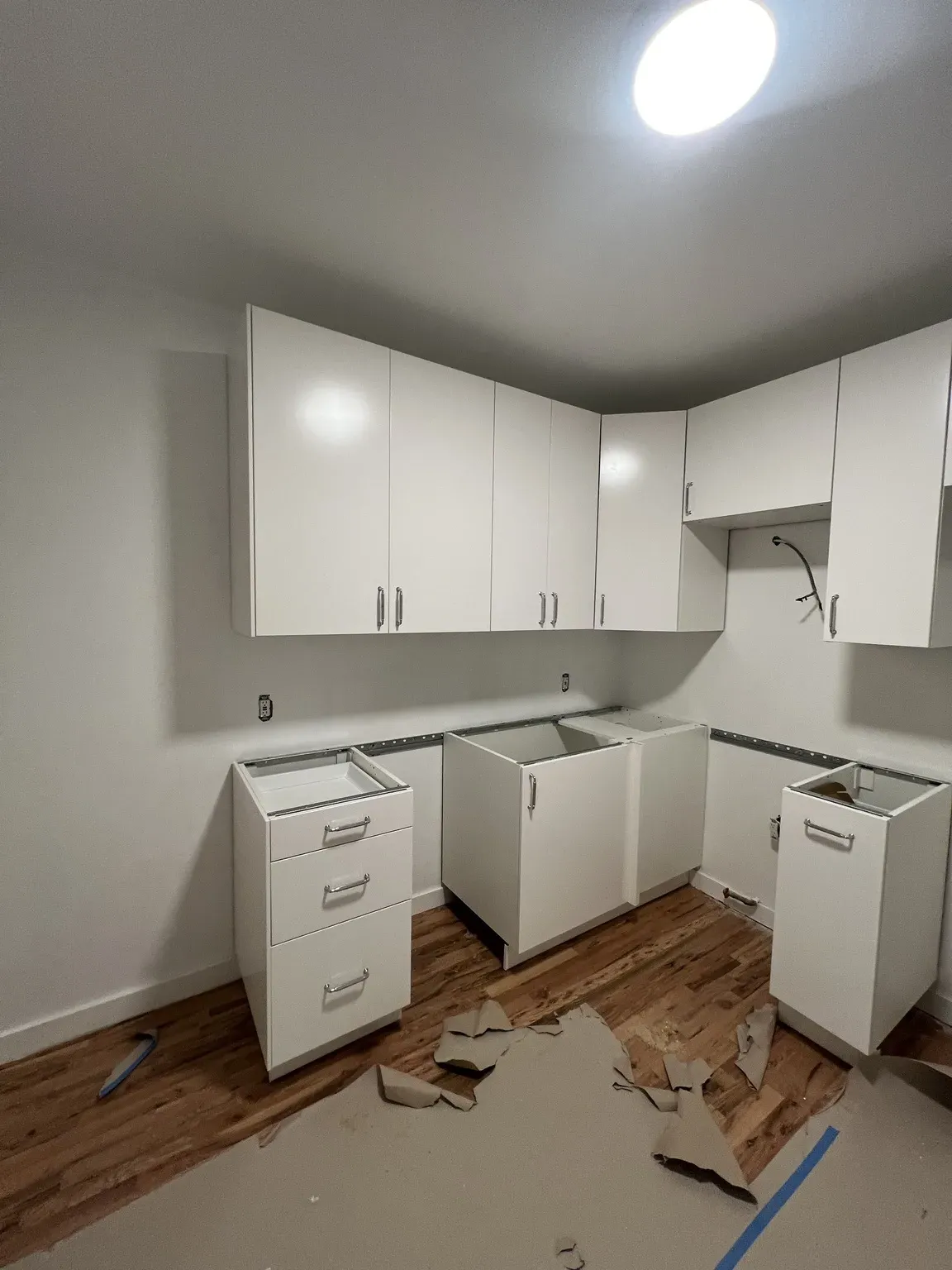
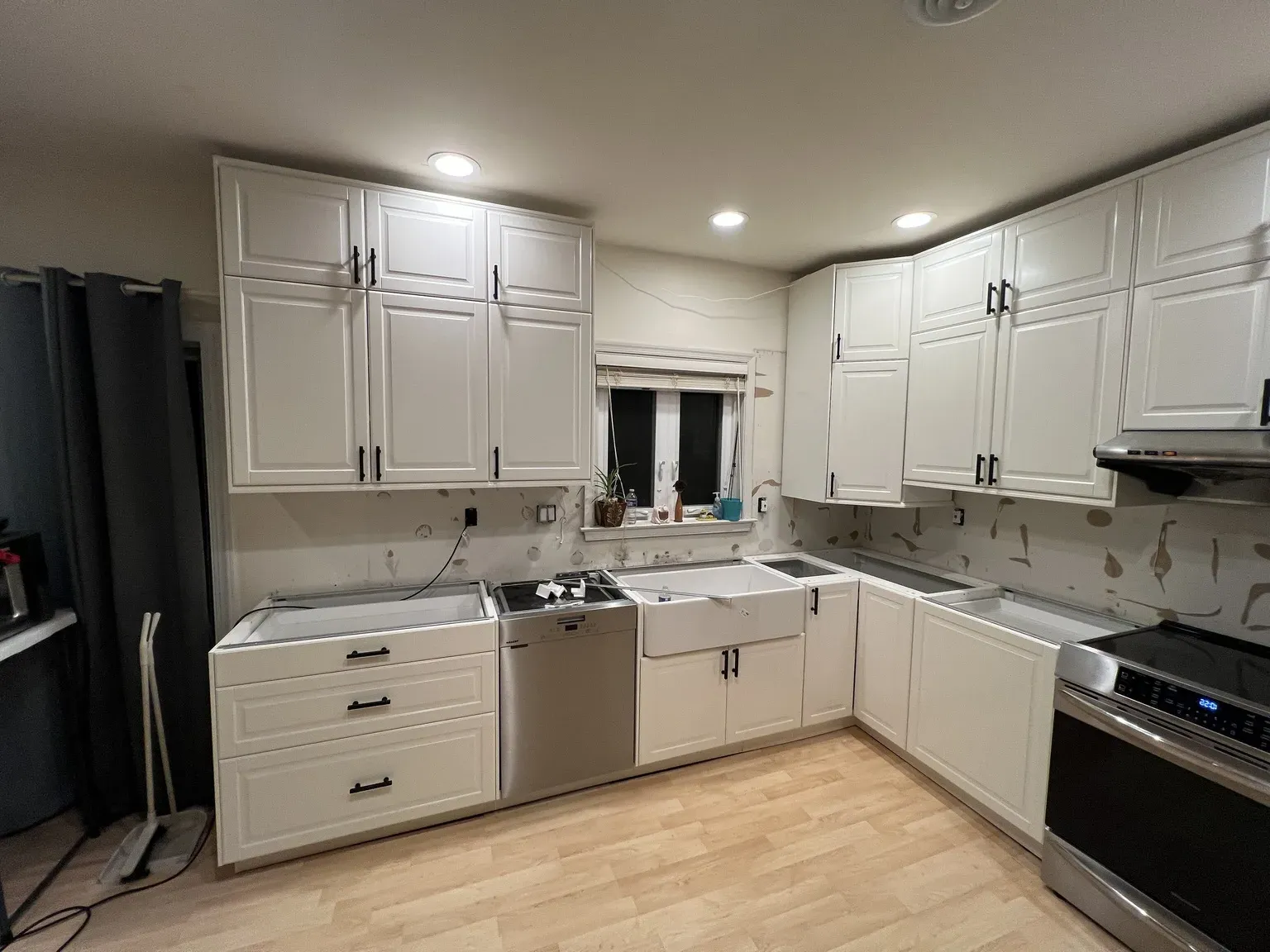
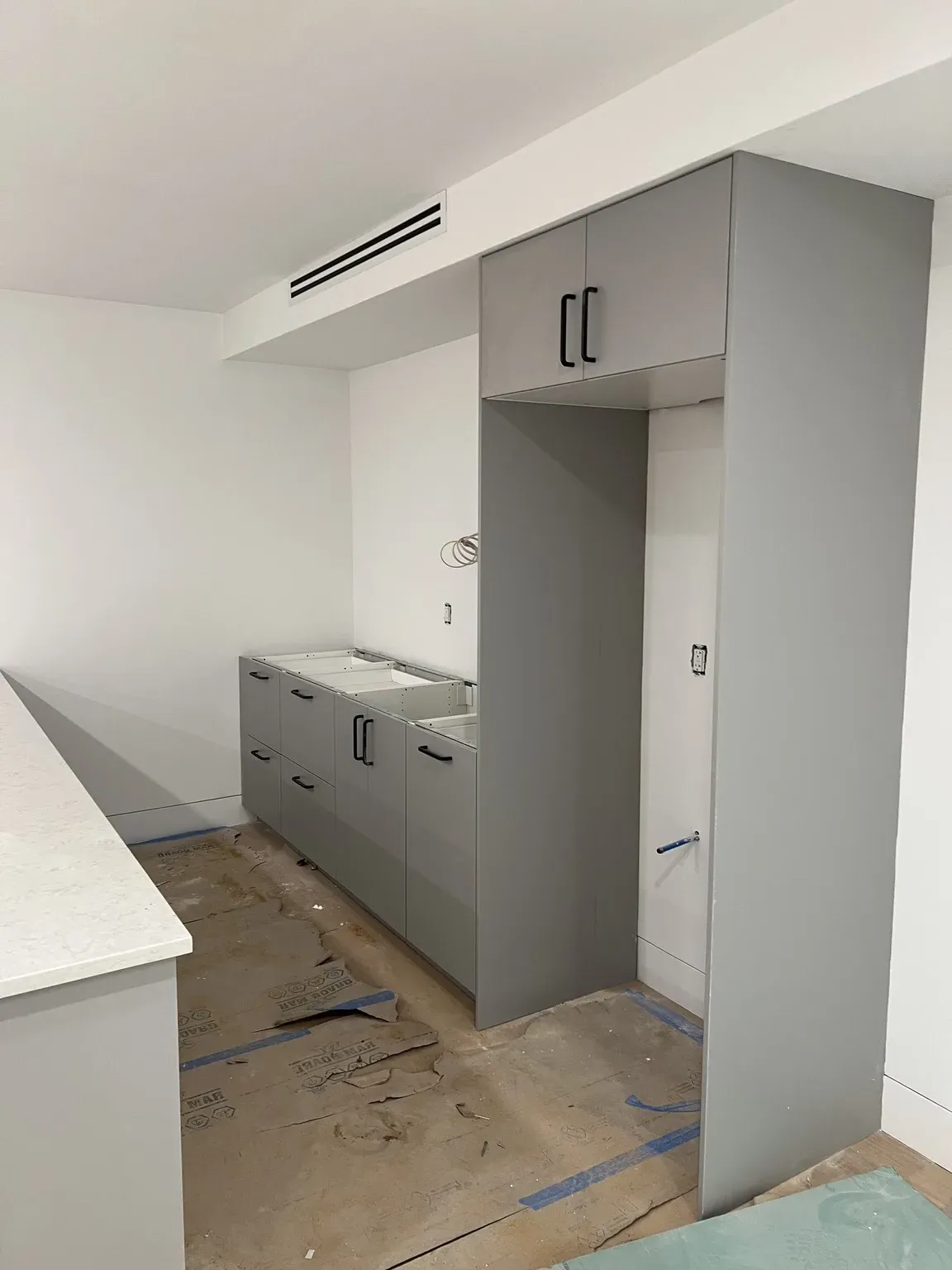
- Yes, a handy homeowner can install an IKEA kitchen; assembling the boxes is straightforward, hanging and leveling them is where most DIY projects go wrong.
- Budget 30–60 minutes per cabinet for assembly and two to four weekends for a full DIY installation of a typical kitchen.
- Plaster walls, uneven floors, stacked wall cabinets, islands and corner solutions are the point where hiring a specialist usually pays for itself.
- A hybrid approach, you assemble and a pro installs, saves money without risking the parts that are hard to redo.
Cost
Saves $2,500–$4,500 in labor on a 10x10
Time
2–4 weekends
Difficulty
Hard
Tools
Full list in our assembly tools guide
On this page
IKEA designed their kitchen system to be accessible to regular people — that's part of their whole philosophy. And yes, thousands of homeowners install IKEA kitchens themselves every year. Some end up with beautiful results they're proud of. Others end up calling a professional halfway through to fix things.
As professionals who specialize in IKEA kitchen installation at Hearthstone Kitchens, we've seen both outcomes. Here's our honest assessment of what it takes to do it yourself.
Honest Difficulty Assessment
On a scale of 1-10, where 1 is assembling an IKEA KALLAX shelf and 10 is a full bathroom gut renovation, installing an IKEA kitchen is about a 6 or 7.
It's not impossibly hard, but it requires:
- Multiple skill sets (carpentry, basic plumbing, potentially electrical)
- Precision (a cabinet that's 1/8" off at the start will be 1/2" off at the end of the run)
- Patience (things will go wrong and you'll need to problem-solve)
- Physical stamina (wall cabinets are heavy and you're working overhead)
- Time — lots of it
Who Should Seriously Consider DIY
- You've done significant home improvement projects before (not just painting)
- You're comfortable using power tools, especially a drill/driver and circular saw
- You have a helper available (you absolutely cannot hang wall cabinets alone safely)
- You can take a week or more off work to dedicate to the project
- You handle frustration well (this will test your patience)
- Your kitchen is relatively straightforward (no major plumbing moves, no islands with plumbing)
Who Should Probably Hire a Pro
- This would be your first major home improvement project
- You don't own basic power tools
- You live in an older home with uneven floors and walls (very common in Massachusetts, Connecticut, and Rhode Island)
- You need the kitchen done in a specific timeframe
- Your kitchen involves plumbing relocation or electrical work
- You don't have a helper
Skills You'll Need
Measuring and Layout (Essential)
You need to be able to measure accurately to 1/16" and transfer those measurements to your walls. You'll be marking level lines, stud locations, cabinet positions, and plumbing center points. One measurement mistake can cascade through the entire kitchen.
Leveling (Essential)
This is probably the single most important skill. Every cabinet must be level and plumb, and they all need to align with each other. If your floors are uneven — and in most New England homes they are — you'll be constantly adjusting IKEA's cabinet legs and shimming.
We have a detailed guide on leveling IKEA cabinets on uneven floors that's worth reading before you start.
Drilling and Fastening (Essential)
You'll be drilling into walls to mount the suspension rail, drilling through cabinet sides to join cabinets together, and driving screws in tight spaces. You need to be comfortable finding studs and drilling into them accurately.
If your home has plaster walls (common in pre-1950s New England homes), drilling is more challenging. Plaster can crack if you're not careful, and standard stud finders often don't work well through plaster and lath.
Cutting and Trimming (Important)
You'll likely need to cut filler strips, trim toe kicks, and possibly modify panels. A circular saw with a fine-tooth blade and a straight edge guide will handle most cuts, but a table saw makes filler strip cuts much cleaner.
Basic Plumbing (Helpful)
At minimum, you'll need to connect your sink drain and water supply lines, and hook up your dishwasher. If you're comfortable with basic plumbing connections, these are manageable tasks. If not, you can hire a plumber just for the connections — contact us for a detailed estimate.
Important: In Massachusetts, Connecticut, and Rhode Island, any work involving gas lines must be done by a licensed plumber. Don't touch gas connections yourself.
Basic Electrical (Helpful)
If you're adding under-cabinet lighting, you may need to run wiring. Any new circuit work should be done by a licensed electrician in MA, CT, and RI. But connecting IKEA's plug-in LED lighting system doesn't require an electrician.
Complete Tool List
Absolutely Essential
- Drill/driver (cordless, with extra batteries) — this is your most-used tool
- Impact driver — not essential but makes driving screws into studs much easier
- 4-foot level — don't cheap out on this; a good level is critical
- Tape measure (25-foot, 1" wide blade)
- Stud finder — get a quality one, especially if you have plaster walls
- Pencil and marking tools
- Clamps — at least 4 quick-release clamps for joining cabinets
- Drill bit set — including 3mm for IKEA's pre-drilled holes and bits for masonry if applicable
- Stepladder — 6-foot minimum for wall cabinet work
- Safety glasses and hearing protection
- Rubber mallet — for cabinet assembly
Highly Recommended
- Circular saw with a fine-tooth blade (for cutting filler strips and panels)
- Jigsaw — for cutting around pipes and outlets in cabinet backs
- Square (combination square or speed square)
- Shims (cedar shims from any hardware store)
- Carpenter's pencil
- Headlamp or work light
- Socket wrench set — for plumbing connections
- Adjustable wrench
- Pliers (regular and needle-nose)
- Utility knife
- Pry bar — for demolition
- Caulk gun and kitchen caulk
Nice to Have
- Table saw — makes precise rip cuts on filler strips much easier
- Laser level — faster and more accurate than a bubble level for long runs
- Cabinet jack — holds wall cabinets in position while you fasten them (much safer than having someone hold them)
- Hole saw kit — for drilling clean holes for plumbing through cabinet backs
- Brad nailer — for attaching toe kicks and trim pieces
For a full breakdown, see our IKEA kitchen assembly tools guide.
Common DIY Mistakes
We get called in to fix DIY installations regularly. Here are the mistakes we see most often:
1. Not Checking Walls for Level and Plumb
The number one mistake. People assume their walls are straight and their floors are level. In New England homes — even relatively new ones — this is rarely the case. Always check before you start.
2. Skipping the Suspension Rail
Some DIYers try to hang wall cabinets with screws directly through the cabinet backs. Don't. IKEA's suspension rail system is specifically designed to distribute weight and allow adjustment. Use it.
3. Not Connecting Cabinets to Each Other
Each pair of adjacent cabinets should be clamped flush and screwed together through the frame. Skipping this step leads to gaps, misaligned doors, and a less stable overall installation.
4. Poor Countertop Support
Base cabinets must be perfectly level and fully supported for countertop installation. If there are gaps or unevenness, the countertop won't sit right, and you risk cracking stone countertops.
5. Forgetting About Plumbing Access
Once cabinets are in, you need to be able to access plumbing connections. Don't forget to cut holes in the right places before installation, and make sure you can reach shut-off valves.
6. Not Ordering Enough Filler
Filler strips fill the gaps between cabinets and walls, around appliances, and at the ends of cabinet runs. New England homes, especially older ones, almost always need more filler than you'd expect. Order extra.
7. Incorrect Door and Drawer Alignment
IKEA's hinges and drawer runners are adjustable in three directions, and getting them all aligned takes patience. Rushing this step results in uneven gaps, doors that don't close properly, and a kitchen that looks "off."
8. Ignoring Cover Panels
Exposed cabinet sides (the end of a run, the side of a peninsula) need cover panels or end panels to look finished. These are easy to forget when ordering but obvious when they're missing.
Time Comparison: DIY vs Pro
| Task | Professional Crew (2 people) | DIY (1-2 people) |
|---|---|---|
| Cabinet assembly (20 cabinets) | 4-6 hours | 10-15 hours |
| Demo of old kitchen | 4-6 hours | 8-12 hours |
| Suspension rail + layout | 1-2 hours | 2-4 hours |
| Base cabinet installation | 4-6 hours | 10-16 hours |
| Wall cabinet installation | 3-5 hours | 8-14 hours |
| Doors, drawers, hardware | 3-4 hours | 6-10 hours |
| Finishing (toe kicks, panels, filler) | 2-3 hours | 4-8 hours |
| Total | 21-32 hours (3-4 days) | 48-79 hours (7-12 days) |
A project that takes our crew 3-4 days will take most DIYers 2-3 weekends or a full week if working consecutive days.
Tasks You Should Always Hire a Pro For
Even committed DIYers should consider hiring licensed professionals for these tasks:
- Gas line disconnection/reconnection: Required by law in MA, CT, and RI
- Electrical panel work or new circuit installation: Code requires a licensed electrician
- Plumbing relocation: Moving drain or supply lines is complex and requires permits
- Structural modifications: Removing or modifying walls, soffits, or load-bearing elements
- Countertop templating and installation (stone/quartz): Too heavy and expensive to risk — fabricators handle this
The Hybrid Approach: Best of Both Worlds
The most cost-effective approach for many homeowners is a hybrid:
- DIY: Cabinet assembly, demolition, painting, hardware installation
- Hire a pro: Cabinet installation, leveling, and alignment
- Hire specialists: Plumbing, electrical, countertop fabrication
This saves you significantly compared to full professional service while ensuring the critical installation work is done right. It's the approach we recommend most often for handy homeowners looking to save money without risking a bad result.
Ready to Decide?
If you've read through all of this and feel confident, go for it — installing an IKEA kitchen yourself is a rewarding project that will save you thousands of dollars. Just take your time, watch plenty of tutorial videos, and don't be afraid to call for help if you get stuck.
If you'd rather have the peace of mind of professional installation — or if you want to take the hybrid approach — get in touch with us. We serve homeowners throughout Massachusetts, Connecticut, and Rhode Island, and we're always happy to discuss what level of help makes sense for your project.
Frequently asked questions
About the authors
This guide was written and reviewed by the Hearthstone Kitchens installation team, who have installed 600+ IKEA kitchens in Massachusetts, Connecticut and Rhode Island over 7+ years. Prices reflect what we see on real quotes in 2026 and are updated when the market moves. We are an independent installer and are not affiliated with IKEA.
Ready to talk about ikea cabinet assembly?
Upload your IKEA plan or a few photos. We will check it for missing pieces and send an itemized estimate within 3 hours, free and with no obligation.