Cost
$150–$600 in materials
Time
Half a day
Difficulty
Moderate
Tools
Miter saw, brad nailer, caulk, filler
On this page
Crown molding is one of those finishing touches that transforms a kitchen from "nice IKEA installation" to "wait, that's IKEA?" It bridges the gap between the tops of wall cabinets and the ceiling, creating a polished, built-in look that makes the whole kitchen feel more intentional and high-end.
Here's how to add crown molding to your IKEA kitchen, whether you use IKEA's own options or go the third-party route.
The Gap Problem: Why Crown Molding Matters
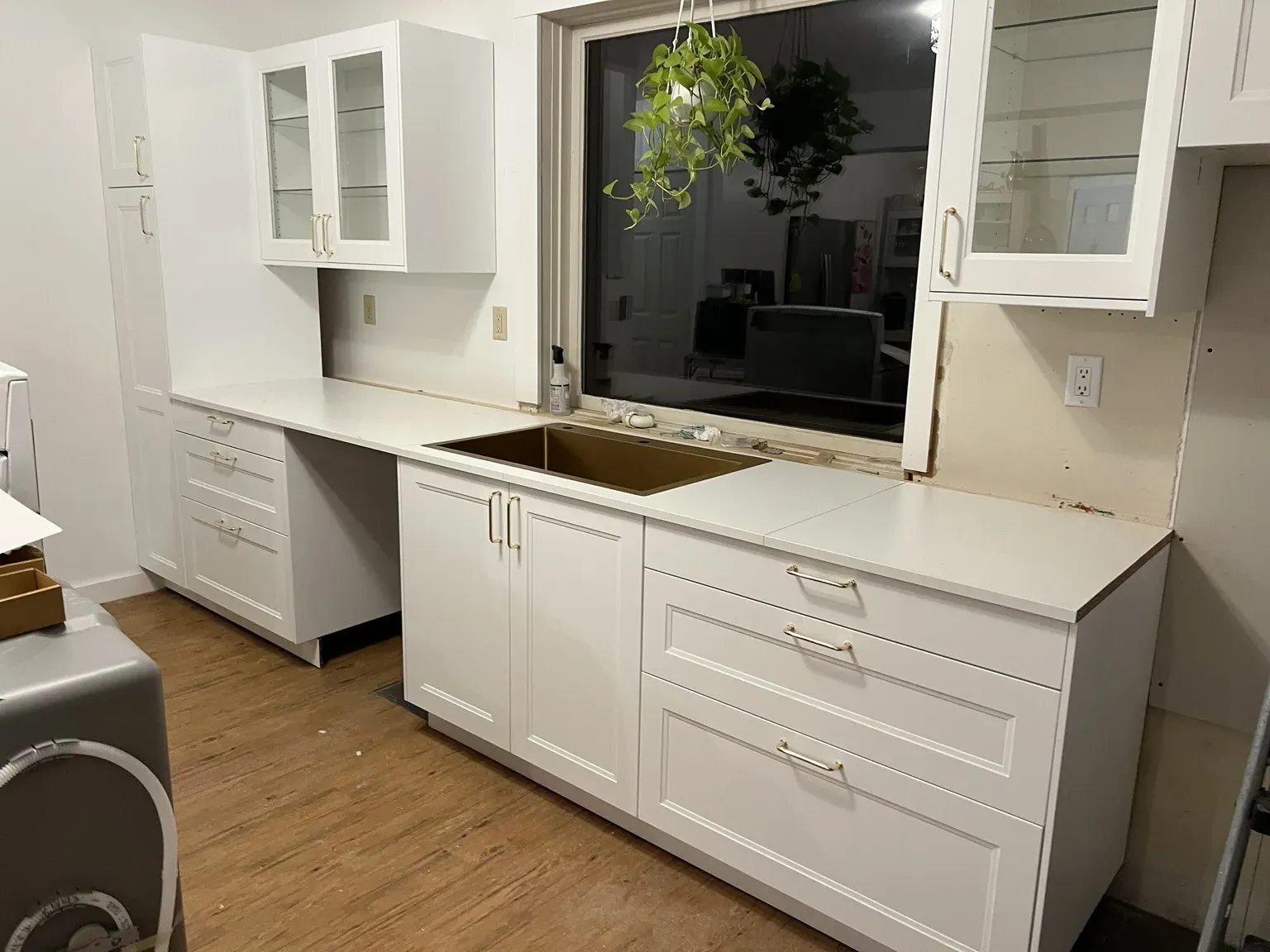
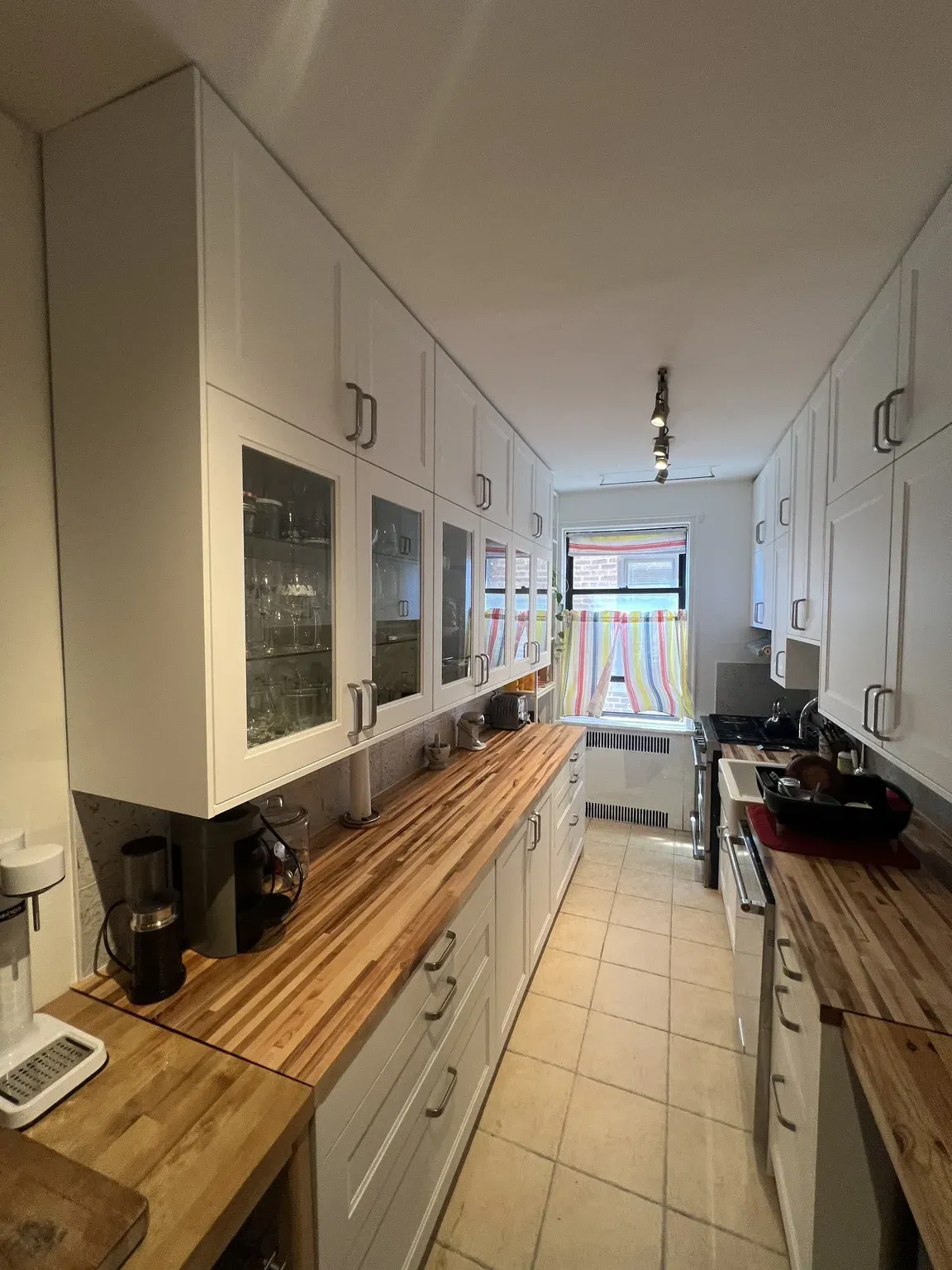
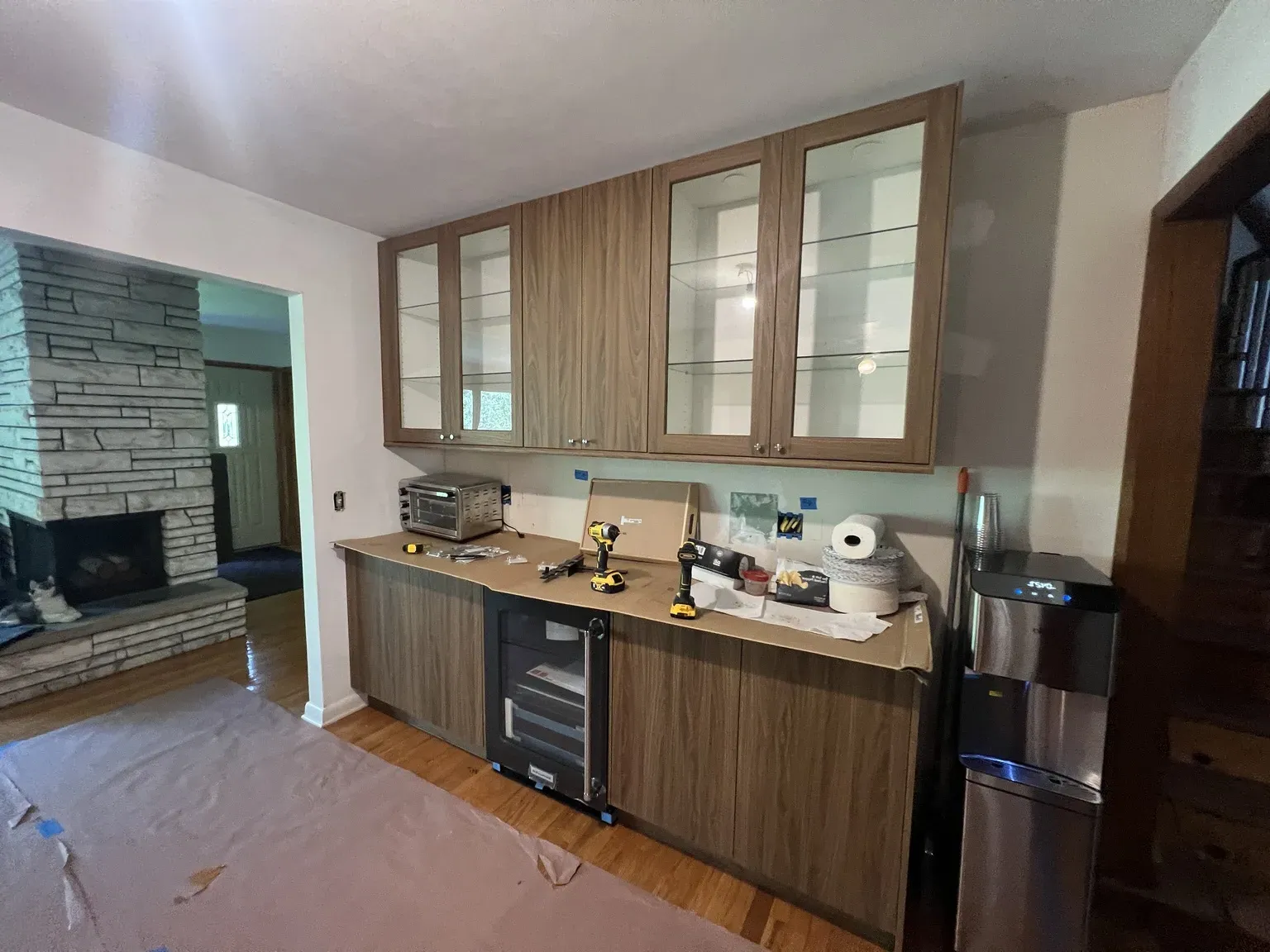
Unless your wall cabinets go all the way to the ceiling, there's a gap above them. In a standard 8-foot ceiling kitchen with 30-inch wall cabinets mounted 18 inches above the counter:
- Top of counter: 36 inches
- Bottom of wall cabinets: 54 inches
- Top of wall cabinets: 84 inches
- Ceiling: 96 inches
- Gap: 12 inches
With 40-inch wall cabinets, the gap shrinks to about 2 inches — but it's still there and it still looks unfinished without a solution.
Options for Handling the Gap
- Crown molding: Bridges a 2-6 inch gap beautifully
- Stacking cabinets: Add a shorter cabinet on top of the main one to reach the ceiling (the "stacked" look)
- Leave it open: Use the space above cabinets for display or leave it empty (can collect dust)
- Extend to ceiling with a soffit: Build a soffit from the cabinet tops to the ceiling (solid, no display, clean look)
- Filler panel + molding combo: A flat filler panel from cabinet top to ceiling, finished with a small crown molding at the ceiling line
IKEA's Own Crown Molding Options
FORBATTRA Deco Strip/Molding
IKEA offers decorative molding strips designed for their cabinet system. These vary by name and availability but typically include:
- Contoured/decorative molding: A classical profile that attaches to the top of wall cabinets
- Available finishes: Typically matches the most popular door styles (white, off-white, sometimes wood-tone)
LERHYTTAN Molding
For LERHYTTAN kitchens, IKEA offers matching crown molding with a profile that complements the door style's craftsman aesthetic.
How IKEA Molding Attaches
IKEA's crown molding typically attaches to the cabinet tops using:
- Clips or brackets that mount to the top of the wall cabinet
- Small finish nails or brad nails for additional security
- The molding sits on top of or slightly above the cabinet top
Limitations of IKEA molding:
- Limited profiles and finishes available
- Only bridges a small gap (the molding is typically 2-3 inches tall)
- If you need to bridge a larger gap, IKEA molding alone isn't sufficient
Using Third-Party Crown Molding
For a more custom look or to bridge a larger gap, third-party crown molding is the way to go. Any standard crown molding from a lumber yard or home improvement store can be adapted for IKEA cabinets.
Step-by-Step Installation
Materials Needed
- Crown molding of your choice (buy enough for the total run plus 15% for waste and miters)
- A nailer board (1x2 or 1x3 lumber strip) to attach the molding to the cabinet tops
- Brad nails (18-gauge) or finish nails
- Wood glue
- Caulk (paintable)
- Paint (to match or complement your cabinets)
- Miter saw (essential for cutting crown molding angles)
Step 1: Install a Nailer Board
Crown molding needs a flat surface to nail into at the top of the cabinets. IKEA cabinet tops are recessed, so you need to add a nailer:
- Cut a 1x2 or 1x3 board to the length of each cabinet run
- Attach it to the top of the wall cabinets — you can screw it down into the cabinet top from above, or use strong construction adhesive
- The nailer board should sit flush with the front edge of the cabinet, providing a surface for the crown molding to attach to
Step 2: Measure and Plan
- Measure the total length of crown molding needed (all cabinet runs)
- Identify inside corners, outside corners, and end points
- Plan your miter angles (inside corners typically need two 45-degree miters; outside corners need opposing 45-degree miters)
Step 3: Cut and Test-Fit
- Set up your miter saw for crown molding cuts. Crown molding is cut upside down and backwards on a miter saw — this is the most confusing part for first-timers. Practice on scrap pieces.
- Cut each piece slightly long and test the fit before nailing
- For inside corners, consider coping one piece instead of mitering both (coping creates a much tighter joint). Coping involves cutting one piece square and using a coping saw to cut the profile on the adjacent piece so it overlaps perfectly.
Step 4: Install
- Start with the longest wall and work around the room
- Apply wood glue to the back of the molding where it contacts the nailer board
- Nail the molding to the nailer board using 18-gauge brad nails every 12-16 inches
- For the top edge, nail into the ceiling blocking if available, or use adhesive
- Work each corner carefully, dry-fitting before nailing
Step 5: Finish
- Fill nail holes with wood filler
- Caulk any gaps between the molding and ceiling (every old New England ceiling has irregularities)
- Caulk the joint between the molding and the cabinet top if there are gaps
- Paint the molding to match or complement the cabinets (prime first if using bare wood molding)
Crown Molding Profiles to Consider
For Traditional Kitchens (BODBYN, LERHYTTAN, SAVEDAL)
- Classic ogee or cove crown molding, 3-4 inches tall
- Dentil molding for a formal look
- Multi-piece buildup (base molding + crown) for a more elaborate effect
For Shaker/Transitional Kitchens (AXSTAD, HAVSTORP, STENSUND)
- Simple cove or flat-back crown molding, 2-3 inches tall
- Clean profiles without ornate detail
- Shaker-style flat panel molding strip with a small crown above
For Modern Kitchens (VOXTORP, RINGHULT, UPPLÖV)
- Flat or angular profiles
- LED channel molding (conceals LED strip lighting for a glowing effect along the ceiling)
- Minimal shadow-line trim (just a narrow reveal, not traditional crown)
Stacking Cabinets vs. Crown Molding
For gaps larger than about 6 inches, stacking cabinets is often a better solution than crown molding:
When to Stack
- Gap of 6 inches or more between cabinet tops and ceiling
- You want additional storage
- Modern or transitional style where crown molding would look out of place
How to Stack
- Mount the main wall cabinets (30-inch or 40-inch) at the standard height
- Add a row of shorter cabinets (15-inch or 20-inch) on top
- Connect the upper and lower cabinet rows with screws through the frames
- Use a small trim molding at the ceiling line to cover any remaining gap
When to Use Crown Molding Instead
- Gap of 2-6 inches (too small for stacking)
- Traditional or transitional kitchen style
- You don't need additional storage
- The ceiling is uneven and you need the crown molding to accommodate irregularities (crown molding is much more forgiving than trying to fit cabinets tight to an uneven ceiling)
Cost Estimation
IKEA Molding Only
Crown molding installation is one of the more challenging DIY kitchen tasks. The cuts are tricky (especially inside corners in out-of-square rooms — and New England rooms are almost never perfectly square), and mistakes are visible.
DIY difficulty rating: 7/10
If you've never installed crown molding before, consider:
- Buying extra material for practice cuts
- Watching several video tutorials before starting
- Starting with the least visible section first
- Using a miter saw with a stop block for repeatable angles
If you'd rather have it done right the first time, Hearthstone Kitchens installs crown molding as part of our IKEA kitchen installation service. We handle everything from the nailer boards to the final paint touch-up. Contact us for a complete quote.
About the authors
This guide was written and reviewed by the Hearthstone Kitchens installation team, who have installed 600+ IKEA kitchens in Massachusetts, Connecticut and Rhode Island over 7+ years. Prices reflect what we see on real quotes in 2026 and are updated when the market moves. We are an independent installer and are not affiliated with IKEA.
Ready to plan your IKEA kitchen?
Upload your IKEA plan or a few photos. We will check it for missing pieces and send an itemized estimate within 3 hours, free and with no obligation.