Key takeaways
- Three ways to reach the ceiling: stack a second row of wall cabinets, build a bulkhead or soffit, or add crown molding and a filler strip.
- Stacking works with 9-foot ceilings and gives real storage; a bulkhead suits 8-foot ceilings and hides uneven ceilings, ducts and pipes.
- Old New England ceilings are rarely level, so whichever method you choose needs a scribed filler at the top.
- A bulkhead adds $600–$2,000 to a typical kitchen depending on length and finish.
Cost
$300–$2,000 depending on method
Time
Half a day to 2 days
Difficulty
Hard
Tools
Second suspension rail or framing lumber, drywall tools
On this page
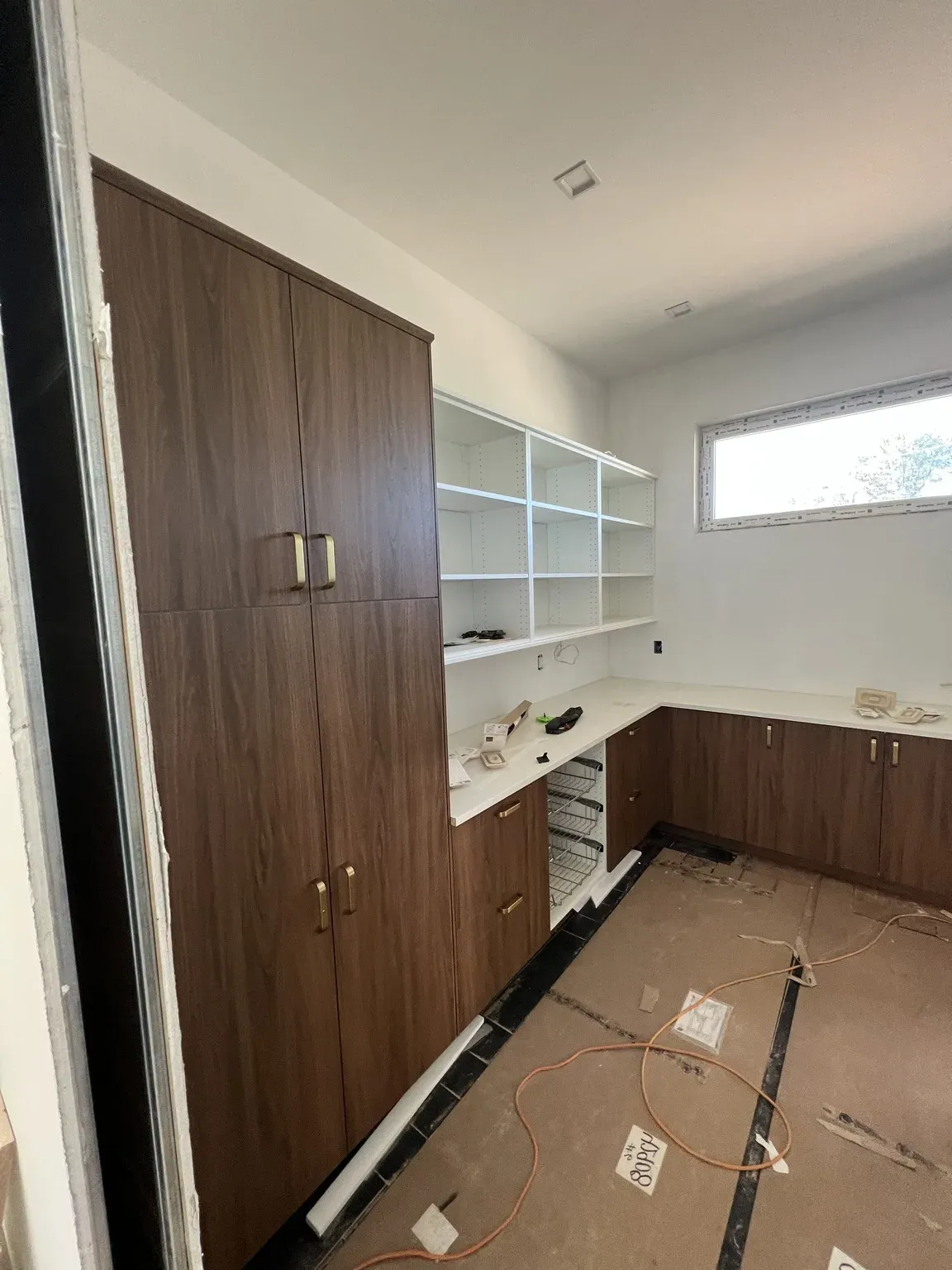
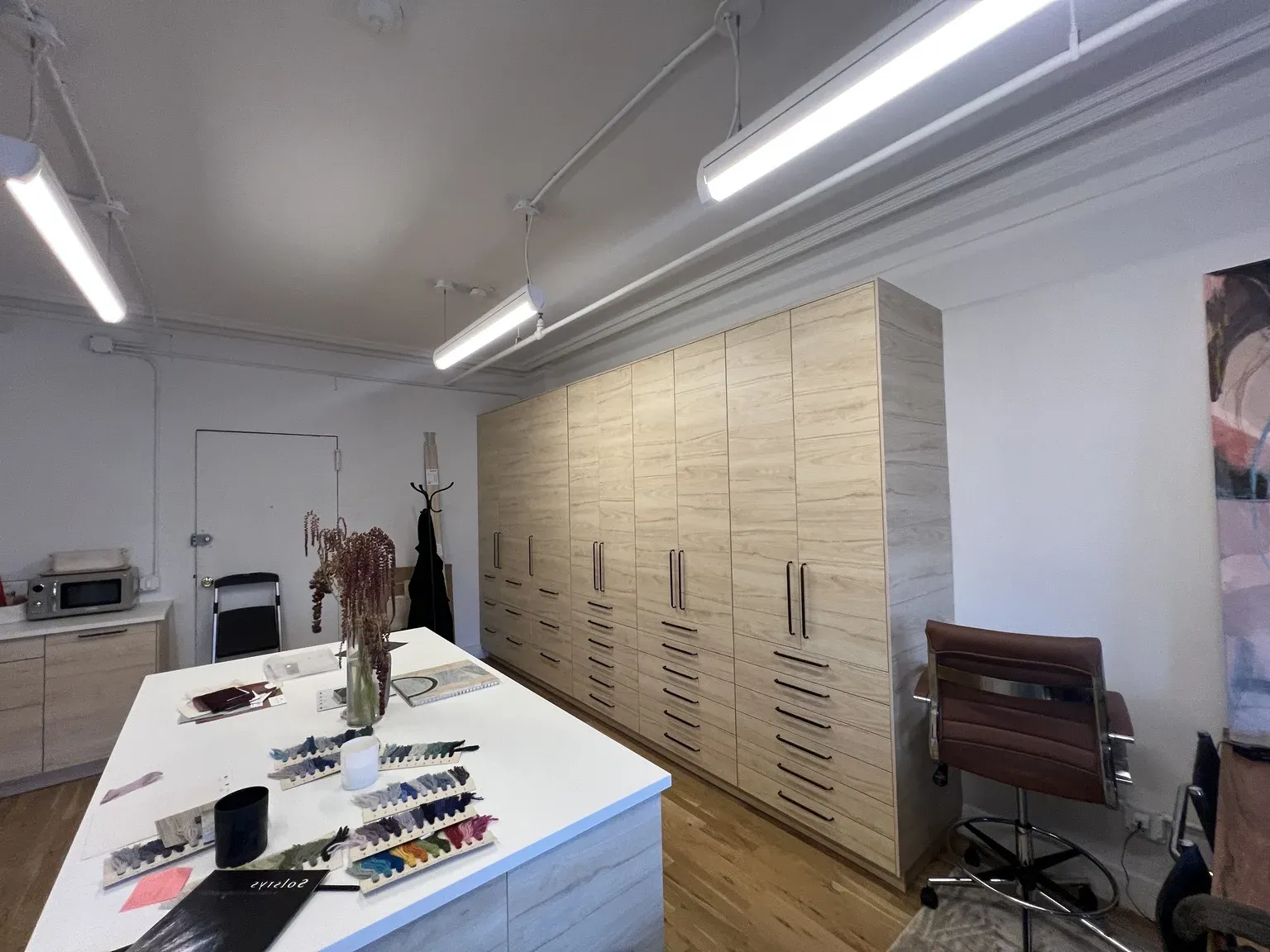
One of the most common questions we hear from homeowners across Massachusetts, Connecticut, and Rhode Island is: "Can I make my IKEA cabinets go all the way to the ceiling?" The answer is absolutely yes — and there are several ways to do it. Each approach has trade-offs in terms of cost, complexity, and final appearance, so let's walk through every option in detail.
Why Extend to the Ceiling?
Before we get into the how, let's talk about the why. Taking your cabinets to the ceiling offers real, tangible benefits:
- More storage space — that 12-18 inches above standard wall cabinets is wasted real estate. In a typical New England kitchen where space is already tight, every inch matters.
- No dust collection — the top of kitchen cabinets is a magnet for grease and dust. Eliminating that gap means less cleaning.
- A custom, built-in appearance — floor-to-ceiling cabinetry looks intentional, expensive, and finished. It transforms an IKEA kitchen from "assembled furniture" to "custom installation."
- Increased home value — buyers notice the difference. A kitchen that looks seamless and complete commands more attention than one with a dusty gap above the cabinets.
Understanding IKEA's Cabinet Heights
IKEA's SEKTION system offers wall cabinets in several heights:
- 15 inches (40 cm) — short cabinets, often used above refrigerators or as accent pieces
- 24 inches (60 cm) — a mid-height option
- 30 inches (76 cm) — the most common wall cabinet height
- 40 inches (100 cm) — the tallest single wall cabinet
Standard ceiling height in most American homes is 8 feet (96 inches). With a standard 34.5-inch base cabinet, a countertop adding about 1.5 inches, and an 18-inch backsplash area, your wall cabinets start roughly 54 inches from the floor. A 30-inch wall cabinet reaches 84 inches — leaving about 12 inches of dead space before a standard 96-inch ceiling.
For homes in older New England neighborhoods — think triple-deckers in Somerville, colonials in Wellesley, or capes in Warwick — ceiling heights can vary from 7.5 feet to 9 feet or more, which affects your approach significantly.
Option 1: Stack Two Rows of Cabinets
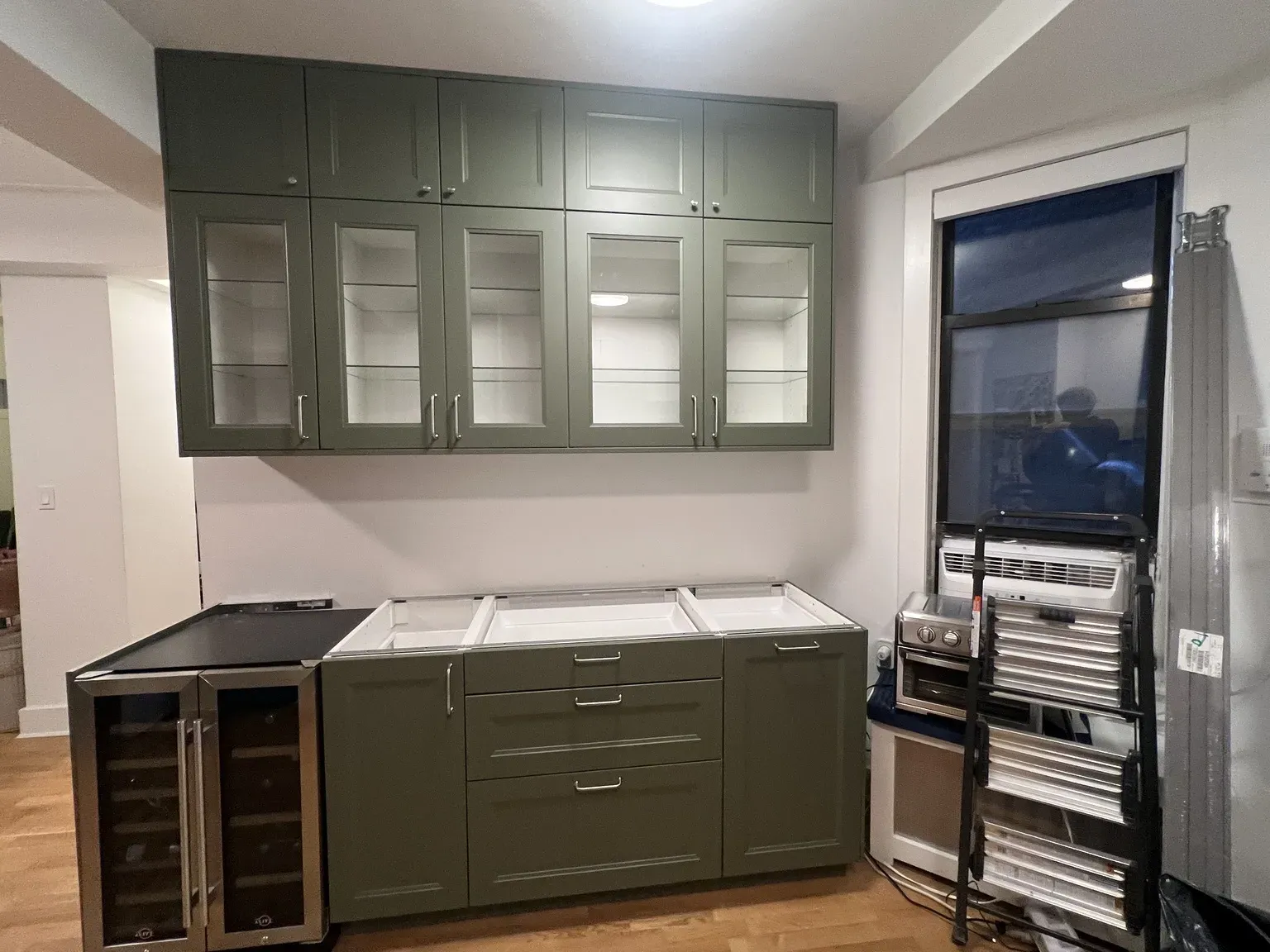
This is the gold standard for a true full-height IKEA kitchen. You install your primary row of wall cabinets at the normal height, then mount a second, shorter row of cabinets above them, reaching up to (or very close to) the ceiling.
How it works:
- Install your main wall cabinets (typically 30" or 40" tall) at the standard height using IKEA's suspension rail system.
- Install a second suspension rail above the first row of cabinets.
- Mount shorter cabinets (15" or 24" tall) on the upper rail.
- Add filler strips or trim between the two rows if there is a small gap.
- Use matching doors on both rows for a cohesive look.
Best ceiling height for this approach: 9 feet or taller. With a 9-foot ceiling, you can stack 30" + 24" wall cabinets and end up with only a couple of inches to close with trim.
Pros:
- Maximum usable storage — the upper cabinets actually open and function
- Clean, professional appearance
- All cabinets are genuine IKEA, so they match perfectly
- The 25-year warranty applies to every cabinet
Cons:
- Upper cabinets can be hard to reach without a step stool (consider what you store up there)
- More expensive — you are buying an entire additional row of cabinets, doors, hinges, and hardware
- Heavier load on the wall — make sure you are screwing into studs, not just drywall
- More complex installation, especially getting the alignment between the two rows just right
Cost: The added cost depends on the number and size of the additional cabinets, as well as the door style you choose. BODBYN and AXSTAD doors cost more per piece than HAGGEBY or VOXTORP.
Structural note: Older homes in places like Brookline, Providence, or Hartford may have plaster-and-lath walls rather than drywall. These walls can be surprisingly strong for mounting, but you absolutely need to locate the studs properly. A stud finder can be unreliable on plaster walls — we often use a strong magnet to find the nails in the lath, which reliably indicate stud locations.
Option 2: Build a Soffit or Bulkhead
If stacking cabinets isn't practical — maybe your ceiling is only 8 feet, or you want a cleaner look without the visual weight of two rows of doors — a soffit (also called a bulkhead) is an excellent alternative.
A soffit is essentially a drywall box built from the top of the cabinets up to the ceiling. It creates a seamless, finished look without adding functional storage.
How it works:
- Install your wall cabinets at the standard height.
- Frame a simple box structure using 2x2 or 2x4 lumber from the top of the cabinets to the ceiling.
- Cover the frame with drywall.
- Tape, mud, sand, and paint the drywall to match your ceiling and walls.
- Optionally, add trim at the junction points for a more finished appearance.
Best ceiling height for this approach: 8 to 8.5 feet, where the gap above cabinets is modest (8-14 inches).
Pros:
- Creates a very clean, architectural look
- Relatively inexpensive in materials. IKEA sells its own crown molding options (like FORBATTRA), or you can use stock crown molding from a lumber yard for more traditional profiles.
How it works:
- Install wall cabinets at the normal height.
- If using IKEA's FORBATTRA molding, attach the molding strips to the top of the cabinets using the included brackets.
- For stock crown molding, build a small nailer strip along the top of the cabinets and attach the crown to both the nailer and the ceiling.
- Fill nail holes, caulk joints, and paint to match.
Pros:
- Simple and affordable. This is essentially a cover panel cut to size and installed between the top of the cabinets and the ceiling.
How it works:
- Measure the gap between the top of your cabinets and the ceiling at multiple points (ceilings are rarely perfectly level).
- Cut IKEA cover panels or matching material to fit the gap.
- Attach with construction adhesive, small nails, or clips.
- Caulk the seam at the ceiling and paint or finish to match.
Pros:
- Clean, contemporary look
- Matches your door style exactly if you use IKEA cover panels
- Moderate cost
| Ceiling Height | Gap Above 30" Wall Cabinets | Recommended Solution |
|---|---|---|
| 8.5 ft | ~18 inches | Soffit or stacked 15" cabinets |
| 9 ft | ~24 inches | Stacked 24" cabinets |
| 9.5-10 ft | 30+ inches | Stacked 30" cabinets or tall soffit with trim detail |
Cost Comparison Summary
| Approach | Materials | Labor (Professional) | Total Estimated Cost |
|---|
Tips From Our Installation Team
After installing hundreds of IKEA kitchens across New England, here are a few things we have learned about ceiling extensions:
-
Always check the ceiling for level before choosing your approach. A ceiling that slopes 1/2 inch across a run of cabinets will be very obvious with a flat panel — but crown molding hides it beautifully.
-
Plan for lighting. If you are building a soffit, it is the perfect time to add under-cabinet lighting or even recessed puck lights in the soffit itself.
-
Consider your door style. Shaker-style doors like AXSTAD and BODBYN look fantastic with stacked cabinets and traditional crown molding. High-gloss modern doors like RINGHULT pair better with clean deco panels or flat soffits.
-
Think about what goes up top. If you are stacking cabinets, plan to store infrequently used items in the upper row — holiday dishes, specialty baking equipment, or that fondue set you use once a year.
-
Account for the weight. A full row of stacked cabinets loaded with dishes puts significant load on the wall. In older Massachusetts or Connecticut homes with plaster walls, we always reinforce the mounting with toggle bolts or French cleats in addition to the IKEA rail system.
Getting It Done Right
Extending cabinets to the ceiling is one of those details that separates a good IKEA kitchen from a great one. It is also one of the areas where professional installation really pays off. Getting two rows of cabinets perfectly aligned, building a straight soffit on an uneven ceiling, or cutting crown molding to fit precisely — these tasks require experience and the right tools.
At Hearthstone Kitchens, we handle ceiling extensions as part of our full IKEA kitchen installation service. Whether you are renovating a cramped galley kitchen in a Cambridge condo or outfitting a spacious farmhouse kitchen in Litchfield County, we will help you choose the right approach and execute it flawlessly.
Contact us for a free consultation and let's talk about making your IKEA kitchen look like a million bucks — from countertop to ceiling.
Frequently asked questions
About the authors
This guide was written and reviewed by the Hearthstone Kitchens installation team, who have installed 600+ IKEA kitchens in Massachusetts, Connecticut and Rhode Island over 7+ years. Prices reflect what we see on real quotes in 2026 and are updated when the market moves. We are an independent installer and are not affiliated with IKEA.
Ready to talk about bulkhead construction?
Upload your IKEA plan or a few photos. We will check it for missing pieces and send an itemized estimate within 3 hours, free and with no obligation.